.webp)
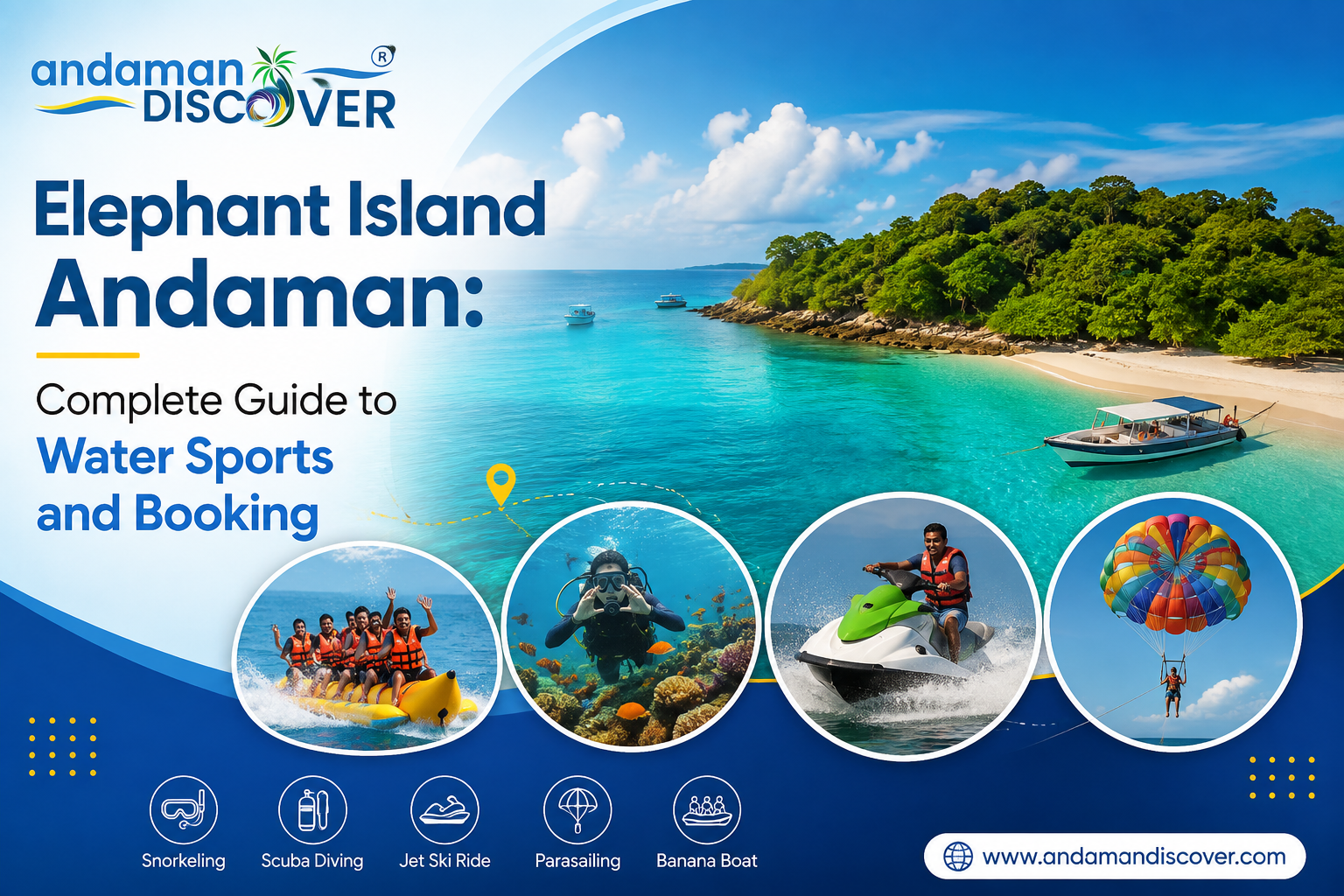
Elephant Island Andaman is the name most travelers search for when they mean Elephant Beach, the water sports hub on Havelock Island that draws thousands of visitors every season. Whether you landed here looking for the island itself or the beach that everyone talks about, this guide covers everything you need before you book: what the place actually is, which water sports are worth your money, what they cost in 2026, and how to plan the trip so you are not standing in a queue for two hours wondering if you made the right call. If you are past the research stage and just want to lock in a spot for snorkeling or jet skiing at Elephant Beach, you can go straight to water sports packages on Andaman Discover and pick a slot. For everyone else, read on.
What People Mean By Elephant Island Andaman
There is no official landmass called Elephant Island in the Andaman archipelago. The place travelers are searching for is Elephant Beach, located on the western coast of Havelock Island, which is officially named Swaraj Dweep. The beach earned its name from elephants that were once used for logging in the area decades ago and would walk down to this exact stretch of coast to bathe. Over time, the beach became so closely tied to that story that many tourists now refer to it as an island of its own, which is how the search term Elephant Island Andaman came about. The confusion is understandable. Elephant Beach is reached only by boat or a jungle trek, it feels cut off from the rest of Havelock, and the shallow coral flats stretch far enough into the sea that it genuinely looks like a separate landmass at low tide. Whatever term brought you here, this is the spot you are thinking of, and it happens to be the single most popular location for water sports in Andaman
Where Elephant Beach Is and How to Reach It**
Elephant Beach sits on Havelock Island, about four kilometers from Havelock jetty. Two ways get you there.
The boat route takes around twenty five minutes from Havelock jetty and drops you directly at a floating pontoon near the beach. Boats generally run from 8 am and the last return trip is around 2:45 pm, since the entire area shuts for tourist activity by 3 pm to protect the reef and give the local ecosystem a break from daily footfall. Round trip boat fare typically falls between 950 and 1,500 rupees per person, and rates were revised again in 2026, so it helps to check current fares before you travel rather than go by numbers you found in an old blog post.
The second option is a jungle trek that starts near Radhanagar Road and covers about 1.8 kilometers through dense forest, taking roughly 30 to 40 minutes on foot. It is free if you go without a guide, though most people hire one for 500 to 1,000 rupees per group since the path is not always well marked. The trek is a good option if you enjoy walking and want to skip the boat queue, but carry water and wear proper shoes since the trail gets muddy after rain.
If you are staying in Port Blair or Neil Island, you will first need a ferry to Havelock. Andaman Discover handles this end to end, and you can check Havelock Island stays and packages to see hotel and ferry combinations that already factor in your Elephant Beach day.
Facilities Available at Elephant Beach
Elephant Beach is a protected natural spot, so do not expect resort-style infrastructure once you get there. Changing rooms and toilets exist near the pontoon area, though they are basic and can get crowded during peak hours. A handful of small stalls sell snacks, packaged food, and fresh coconut water, but the choices are limited, so eating a proper breakfast before you leave Havelock is a good idea. Water sports vendors bring their own gear for snorkeling, jet skiing, sea walking, and banana boat rides, and most operators keep a basic first aid kit on hand along with a lifeguard stationed near the main activity zone. A few shaded resting spots sit under trees or makeshift canopies, which is about as much shade as you will find, so carrying a hat matters more here than at a beach with built-up cabanas. Since commercial development is intentionally kept minimal to protect the reef, treat this as a half-day activity stop rather than a place to spend the whole day lounging with amenities on tap.
Water Sports at Elephant Beach
Elephant Beach carries the reputation of being the adventure capital of Havelock Island, and it earns that title through sheer variety. Almost every popular water activity in the Andamans is available here, often within a hundred meters of each other.
Snorkeling
Snorkeling is the activity most people come for, and for good reason. The coral bed starts close to the shore, so you do not need to swim far to see clownfish, parrotfish, sea cucumbers, and coral formations in shades of green, purple, and orange. Guides usually hold onto first timers or hand out life jackets, so not knowing how to swim is not a dealbreaker. Sessions run about 30 to 45 minutes and cost between 500 and 800 rupees depending on the season and operator. If snorkeling is your main goal, you can check snorkeling slots and pricing here and lock in a time before you land in Havelock, since weekend slots fill up fast during peak months.
Scuba Diving
A lot of blogs claim Elephant Beach is where beginner scuba diving happens, but that is only partly accurate. Elephant Beach mostly offers introductory dive experiences in shallow water near the shore, while serious certified diving and PADI courses happen at dedicated dive sites elsewhere around Havelock, where visibility and depth are better suited to training. If you want an actual taste of scuba without commitment, the shallow introductory dive at Elephant Beach works fine. If you are chasing a certification or a real reef dive, plan a separate day for scuba diving in Andaman at a proper dive site instead of expecting it all at Elephant Beach.
Sea Walk
Sea walking lets you walk on the ocean floor wearing a specialized helmet that keeps air flowing while your head stays completely dry. You do not need to know how to swim, and it suits older travelers or anyone nervous about full submersion. You get close to coral and fish for around 20 minutes, and the experience costs roughly 2,500 to 3,500 rupees depending on the operator and season.
Jet Skiing
Jet skiing is the fastest, loudest option on the beach, and it is priced accordingly, usually between 1,200 and 2,000 rupees for a short ride. It is a straightforward adrenaline activity rather than a wildlife experience, so go in expecting speed over serenity. Couples and groups often book this alongside a calmer activity like snorkeling to balance out the day.
Parasailing
Parasailing gives you an aerial view of the coastline, the coral shelf, and the deep blue beyond it, all while strapped to a parachute towed by a speedboat. Flights last around 8 to 10 minutes and cost between 2,000 and 3,000 rupees. It is one of the better photo opportunities on the beach, since you get a genuine bird’s eye look at how the coral flats stretch into the sea, which is part of why the area gets mistaken for a separate island in the first place.
Glass Bottom Boat Ride
If you would rather stay dry and still see the coral, a glass bottom boat ride is the easiest way to do it. You sit in a boat with a transparent floor panel and drift over the reef for about 20 to 30 minutes. It works well for young children, elderly travelers, or anyone who simply prefers not to get in the water, and it is one of the more affordable activities on the beach at around 500 to 700 rupees per person.
Kayaking
Kayaking around the mangrove-lined edges near Elephant Beach is a quieter option compared to the jet ski crowd. It suits people who want light physical activity and a calmer pace, and sessions typically run 30 to 45 minutes.
Banana Boat Rides
A banana boat ride is the group activity of the bunch. Four to six people sit on an inflatable banana-shaped tube towed at speed by a boat, and the fun comes from the bumps and the near-certain chance of everyone tipping into the water together. It is priced lower than jet skiing, usually around 500 to 800 rupees per person, and works well for friend groups or families with older kids who want a shared laugh rather than a solo adrenaline hit.
Underwater Photography
Several operators at Elephant Beach now offer underwater photography add-ons alongside snorkeling or the sea walk, using GoPro-style cameras to capture your time near the coral. This usually costs an extra few hundred rupees on top of the activity fee and gets you a set of photos or a short video by the end of the session. If you plan to use this service, confirm the cost and delivery method with the operator before you get in the water, since pricing is not always displayed upfront.
Most travelers do not do everything in one visit. A common and sensible combination is snorkeling plus one high energy activity like jet skiing or parasailing, which keeps the day balanced without burning through your budget or your patience in the queue system that most operators run.
Beach Safety and Etiquette
Elephant Beach sits inside a protected coastal zone, and a few safety points matter more here than at an average beach. Watch for the posted warning signs about freshwater crocodiles, since these creatures occasionally come ashore to bask, particularly near the mangrove edges away from the main activity zone. Staying within the marked snorkeling and swimming areas keeps you clear of any risk and is also where the visibility and coral cover are best anyway.
Always wear the life jacket handed to you for boat rides and water activities, even if you are a confident swimmer, since operators enforce this as a safety standard rather than a suggestion. Avoid touching, standing on, or breaking off pieces of coral, and do not collect shells to take home, since many of them are homes for hermit crabs and other small marine life. Keep noise levels reasonable and skip the loud music, both out of respect for other visitors and because the area sits within a conservation zone. Carrying your own trash back with you rather than leaving it on the sand is expected and taken seriously, since single use plastic is banned across the Andamans and littering fines do apply in protected zones.
What to Pack for Elephant Beach
Pack light and pack smart. A quick-dry swimsuit or beachwear, a change of clothes, and a pair of flip-flops or water shoes cover the basics. Reef-safe sunscreen, a hat, and sunglasses matter more here than at most beaches since shade is limited.
A waterproof pouch or dry bag protects your phone and cash while you move between activities, and a reusable water bottle saves you from relying on the limited stalls for hydration. If you are taking the forest trek instead of the boat, sturdy shoes and a bit of insect repellent make the walk far more comfortable.
Carry a basic first aid item or two if you are prone to motion sickness on boats, and keep your activity booking confirmation and a valid ID handy, since some operators ask for it before you start.
Pricing and Rules You Should Know Before You Go
Prices at Elephant Beach are not fixed by a single authority, so they vary a little by operator and season, though the range stays fairly consistent across vendors. Entry to the beach itself is free. What you pay for is the boat transfer or trek guide, plus whichever activities you select once you arrive. Boat operators explain the activity menu and pricing before you even leave Havelock jetty, so you can plan your budget in advance rather than negotiating on the sand.
A few rules apply across the board. Single use plastic is banned throughout the Andaman Islands, so carry a reusable bottle. The beach and water activity zone closes by 3 pm, and boats stop running back to Havelock jetty shortly after, so arriving early in the morning gives you the most time and the shortest queues. Reef safe or mineral sunscreen is strongly encouraged, since regular sunscreen chemicals contribute to coral damage over time, and standing on coral or collecting shells is discouraged for the same reason.
Booking through a local operator ahead of time removes most of the uncertainty. Andaman Discover keeps its Elephant Beach activity listings updated with current fares, so you are not caught off guard by a mid season price revision.
Best Time to Visit Elephant Beach
The ideal window runs from November through April, when the sea stays calm and visibility underwater is at its best for snorkeling and diving. December to February is peak season with pleasant weather and the clearest water, though it is also the busiest period, so early morning visits matter even more during these months. May through September brings the monsoon, choppier seas, and periodic activity suspensions when conditions turn unsafe, so it is not the best stretch if water sports are the main reason for your trip.
Practical Tips for First Time Visitors
Arrive at Havelock jetty by 8 am if you want the boat option, since queues build up fast once the tourist rush starts. Carry cash in small denominations, since not every vendor on the beach accepts cards or digital payments reliably. Wear a rash guard or light cover up instead of relying only on sunscreen, both for reef protection and to avoid sunburn during the hours you will spend in and around the water. Pack a dry bag for your phone and wallet if you plan to try more than one water activity, since you will be moving between vendors on wet sand.
If you cannot swim, do not let that stop you from visiting. Sea walking, glass bottom boat rides, and guided snorkeling with a life jacket are all designed for non swimmers, and operators are used to first timers who have never been in open water before.
Combining Elephant Beach With the Rest of Havelock
Most visitors do not treat Elephant Beach as a standalone trip. Havelock Island holds two other major beaches, Radhanagar and Kalapathar, and a common itinerary spreads three or four days across all three. Radhanagar is better suited for a quiet sunset and a long walk on soft sand, while Kalapathar works well for sunrise photography with far fewer crowds than Elephant Beach ever sees. Elephant Beach, by contrast, is built for activity rather than relaxation, so pairing an active morning here with a slower evening elsewhere on the island tends to work better than trying to pack everything into a single rushed day. If you are mapping out a longer stay, it helps to look at things to do across Havelock before fixing your day-wise plan, since ferry timings and boat schedules can shift your available windows more than people expect.
Where to Stay Near Elephant Beach
Most travelers base themselves in Havelock town or near Beach No. 3, which keeps the jetty and Elephant Beach boat point within easy reach. Options range from budget guesthouses to premium beachfront resorts, and picking the right one depends on how many days you plan to spend on the island doing more than just Elephant Beach. If Radhanagar Beach or Kalapathar Beach are also on your list, staying centrally in Havelock saves you a lot of back and forth. You can browse Havelock hotel options sorted by category to match your budget and preferred proximity to the jetty.
Why Book Your Elephant Beach Water Sports Through Andaman Discover
Booking water sports on the spot at Elephant Beach works fine if you do not mind waiting in line and taking whatever slot is left when you arrive. Booking ahead removes that risk entirely. Andaman Discover runs verified activity slots with current pricing, so you know exactly what you are paying before you land in Havelock, and you avoid the situation where a popular activity is sold out by the time your boat reaches the beach.
Beyond individual activities, Andaman Discover also puts together full Andaman tour packages that combine Havelock, Neil Island, and Port Blair with water sports, ferry transfers, and hotel stays bundled into one plan. If you would rather not piece together the ferry timings, hotel bookings, and activity slots on your own, a customized tour plan built around your dates and budget takes that work off your hands. For direct questions about current Elephant Beach fares or activity availability, the contact page connects you with someone who can confirm details before you commit.
Frequently Asked Questions
**Is Elephant Island Andaman a real island? **
No. There is no separate landmass officially called Elephant Island in the Andamans. The term refers to Elephant Beach on Havelock Island, which is where nearly all the water sports activity people are searching for actually takes place.
How do I get to Elephant Beach from Havelock jetty?
You can either take a boat, which takes about 25 minutes and costs between 950 and 1,500 rupees round trip, or trek through the forest in around 40 minutes, which is free without a guide or 500 to 1,000 rupees per group with one.
**What water sports are available at Elephant Beach? **
Snorkeling, introductory scuba diving, sea walking, jet skiing, parasailing, glass bottom boat rides, and kayaking are all available, with prices ranging roughly from 500 to 3,500 rupees depending on the activity.
Is there an entry fee for Elephant Beach?
No, the beach itself is free to enter. You pay only for the boat transfer or trek guide and for whichever water activities you choose once you arrive.
Do I need to know how to swim for the water sports here?
No. Sea walking requires zero swimming ability, snorkeling is done with a life jacket and a guide, and glass bottom boat rides keep you completely dry, so non swimmers can still enjoy most of what Elephant Beach offers.
What is the best time to visit Elephant Beach for water sports?
November through April offers the calmest seas and best underwater visibility, with December to February being the most popular and pleasant stretch of that window.
What time does Elephant Beach close?
The water sports zone and beach access typically close by 3 pm, and the last boats back to Havelock jetty leave shortly after, so plan to arrive early to make the most of your visit.
Are there crocodiles at Elephant Beach?
Freshwater crocodiles occasionally come ashore near the mangrove edges away from the main activity zone, and the area has posted warning signs. Staying within the marked snorkeling and water sports zone keeps you well clear of any risk.
What facilities are available at Elephant Beach?
Basic changing rooms, limited public toilets, small food and drink stalls, shaded resting spots, and water sports operators with lifeguards and first aid kits are available. There are no large-scale resort facilities since the area is a protected natural zone.
Elephant Beach earns the reputation people are chasing when they search for Elephant Island Andaman, and once you understand what it actually offers, planning the visit becomes far simpler. Pick your activities, check current pricing, and book ahead so your day runs on your schedule instead of a walk-in queue. Browse water sports in Andaman on Andaman Discover and get your Elephant Beach day confirmed before you land.